
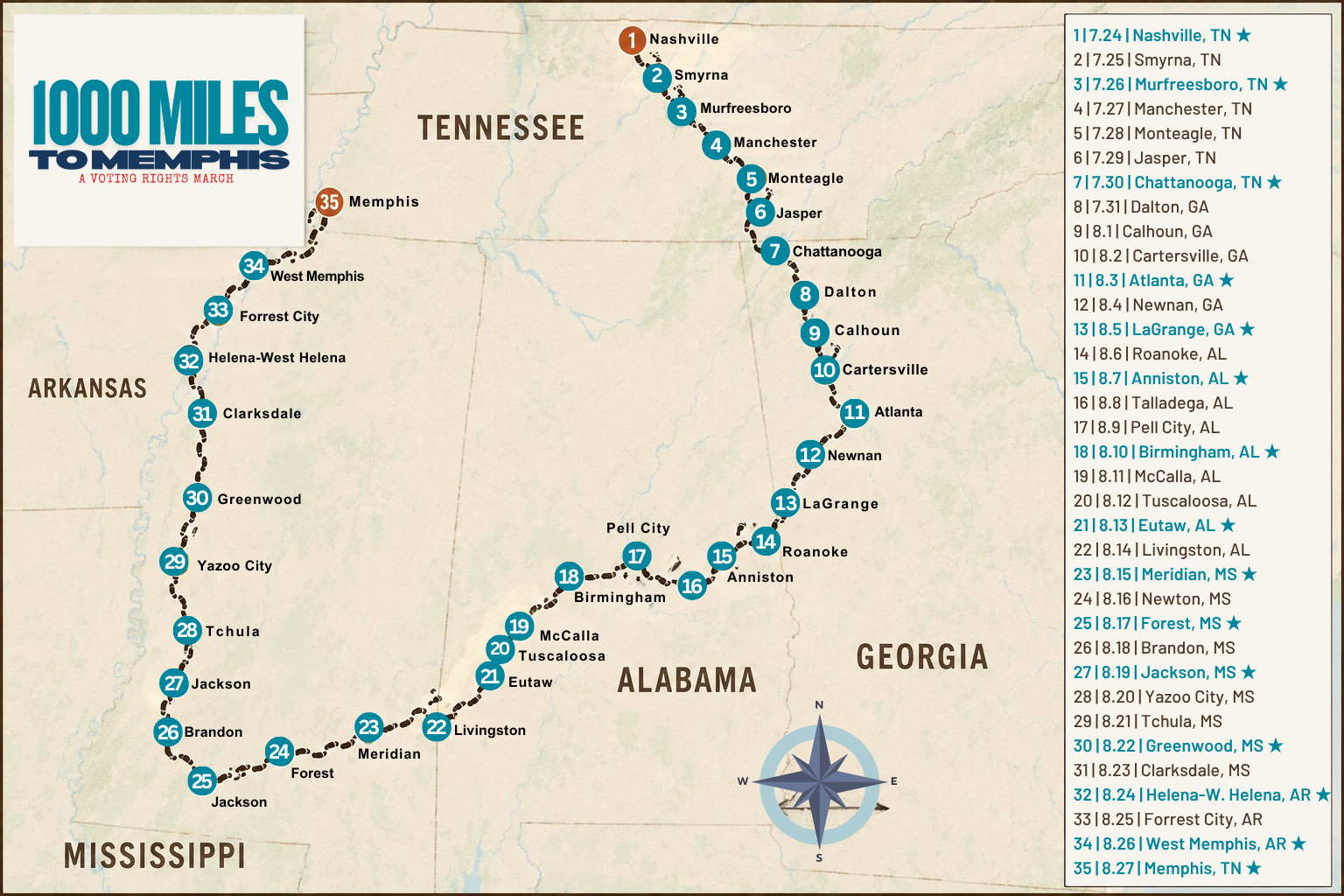
Why this route?
The route intentionally travels through some of the most racially gerrymandered districts in the South. These are places deeply affected by the decimation of the Voting Rights Act, most recently in the Callais decision. In many cases, these towns have been written off as unreachable, unchangeable, and not worth the investment by the rest of the country. The rest of the country is, obviously, wrong.
The truth is that we could have chosen almost any path through the South and we would have been walking in the footsteps of racism, discrimination, and federally-mandated Native American genocide.
Such is the nature of the American South.
But we are equally walking in the shadows of giants of the Civil Rights movement, Labor Rights organizers, and Suffragettes.
Our march ends in Memphis because Memphis is not just symbolic. It is one of the Blackest major cities in America, a city central to the civil rights movement, and a place where the fight for representation, labor dignity, and democratic power continues today.
And, honestly, some of this is just practical. Where do walkable roads go? How much ground can we cover in a day?
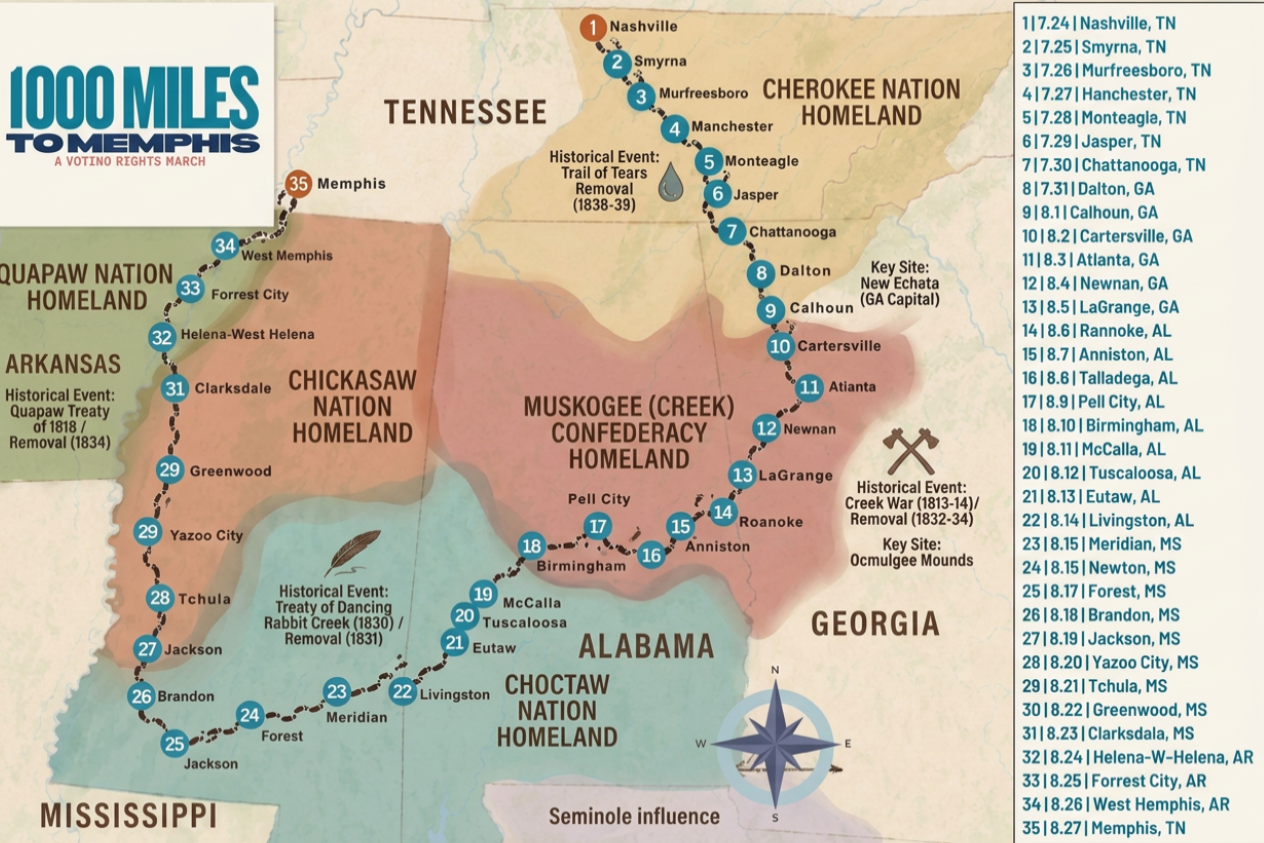
Walking through Native Lands
As we march from Nashville to Memphis, we travel through the ancestral and present day homelands of the Cherokee, Chickasaw, and Muscogee (Creek) Nations. These sovereign Tribal Nations have cared for, governed, and maintained relationships with these lands since time immemorial, and they continue to do so today.
Our route also passes through places forever marked by the Trail of Tears, where Native families were forcibly removed from their homes as part of the United States’ policy of Indian Removal. We cannot talk about democracy without telling the truth about the genocide, displacement, and policies that sought to erase Native peoples. We also remember that, even after many Native people became U.S. citizens through the Indian Citizenship Act of 1924, barriers to voting remained in many states for decades.
As we walk together, may this journey remind us that democracy is more than casting a ballot. It is also about telling the truth about our shared history, honoring Tribal sovereignty, and recognizing the enduring presence of the first peoples of these lands.